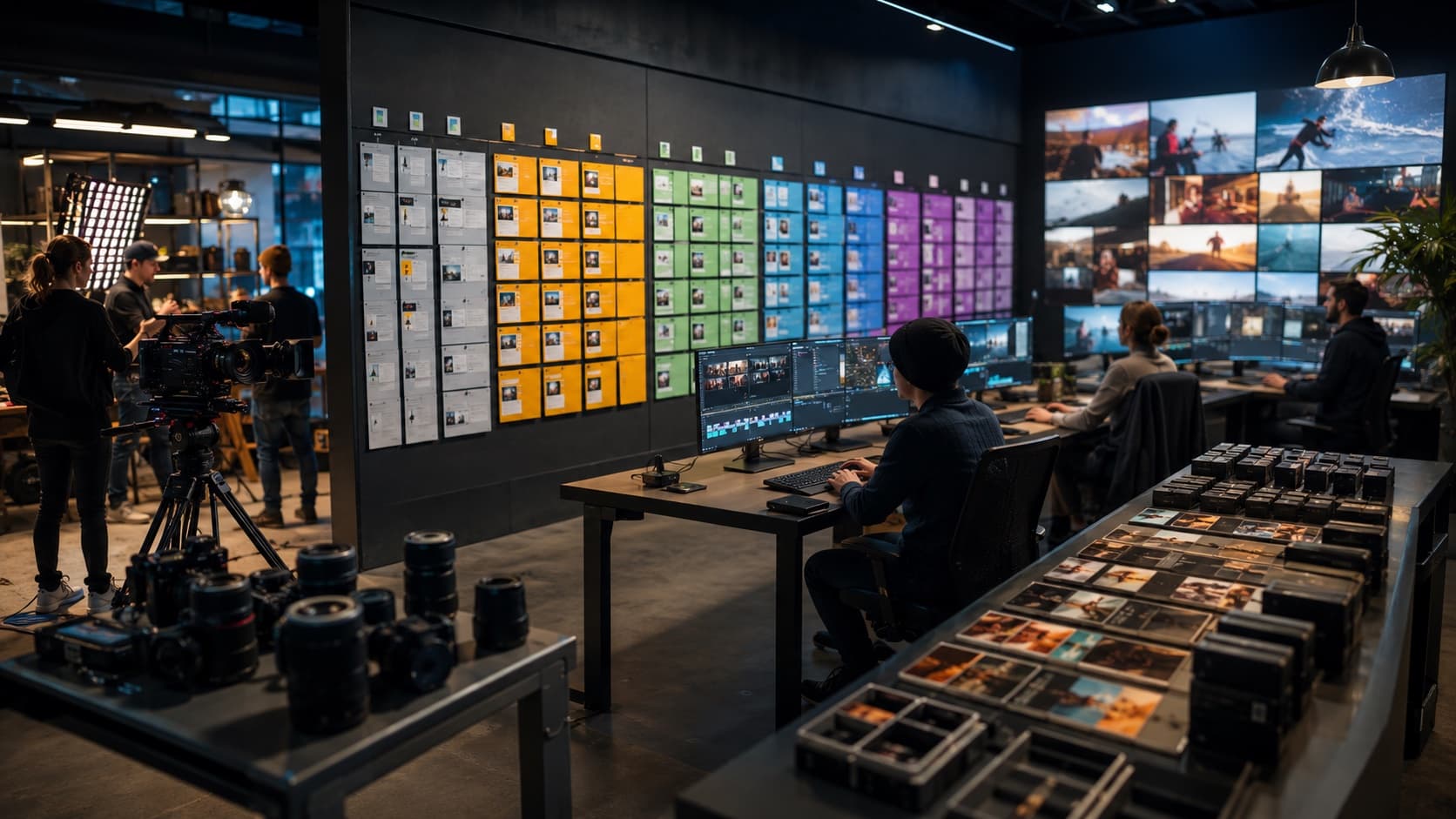
✦ Featured
A Video AI Can't Read Is Worth Nothing
Why video is becoming the leading asset in generative search, and how to produce content that answer engines can actually read and cite.
Video production methods, field notes, and social media trends — by and for production teams.
Why video is becoming the leading asset in generative search, and how to produce content that answer engines can actually read and cite.
 Methods
Your video production Notion worked at 3 people and breaks at 10. Why the problem isn't your template but the tool itself, and what to use instead.
MethodsJira was built for dev sprints, not shoot days. Why video teams juggling multiple clients or brands always end up working around Jira, and what to use instead.
 Methods
Content recipes are post mortems. The only durable way to learn what works is to structure production around real audience signals, controlled variation, and traceable performance.
MethodsA video content factory is an organization that produces video content at volume for the marketing of one or several brands. Pipeline, batch shooting, workload measurement: the real method, seen from the inside, not the agency brochure.
 Methods
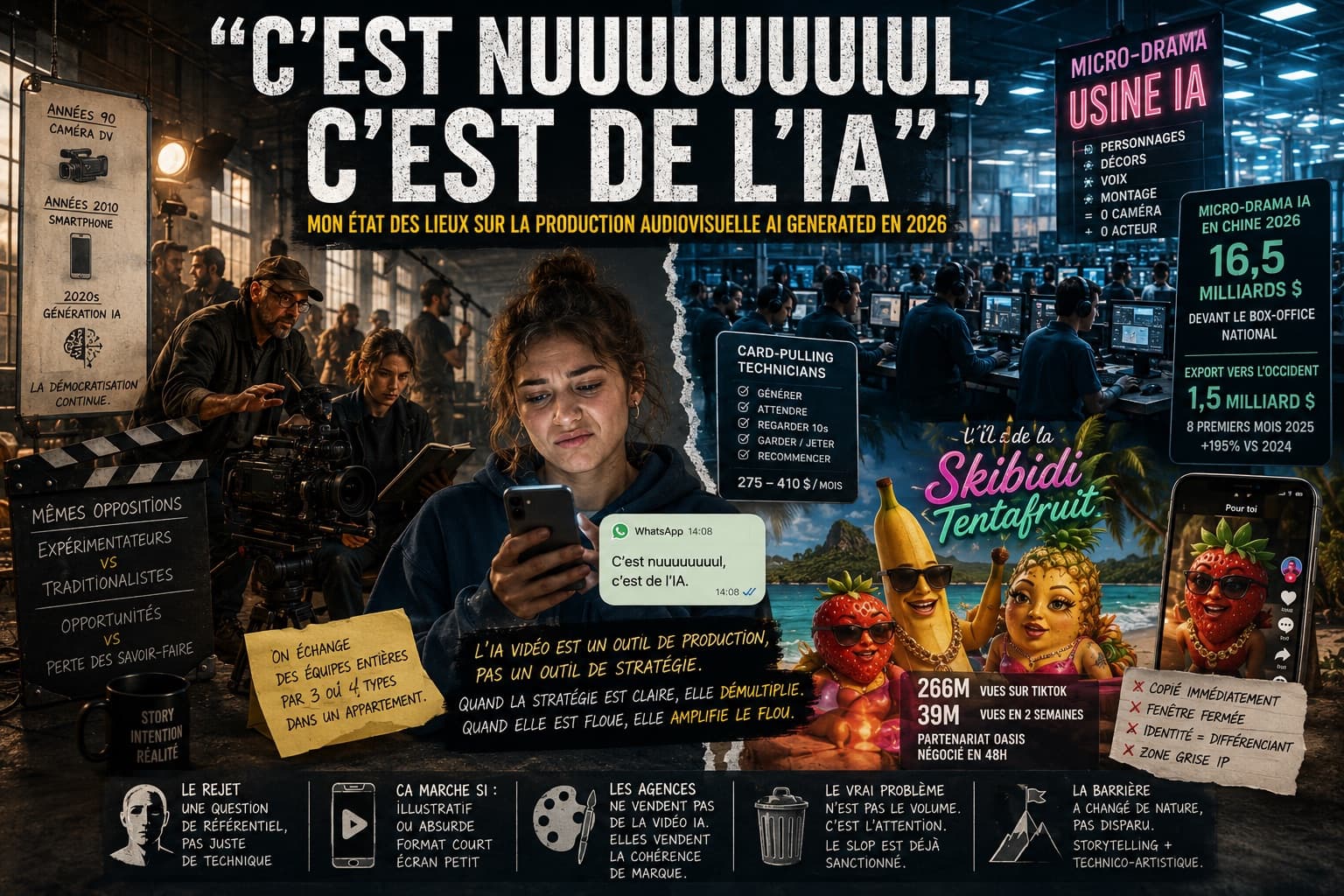
Generative AI video is making audiovisual production easier to access, but it does not solve attention, brand coherence, or editorial strategy. A 2026 field report.
 Methods
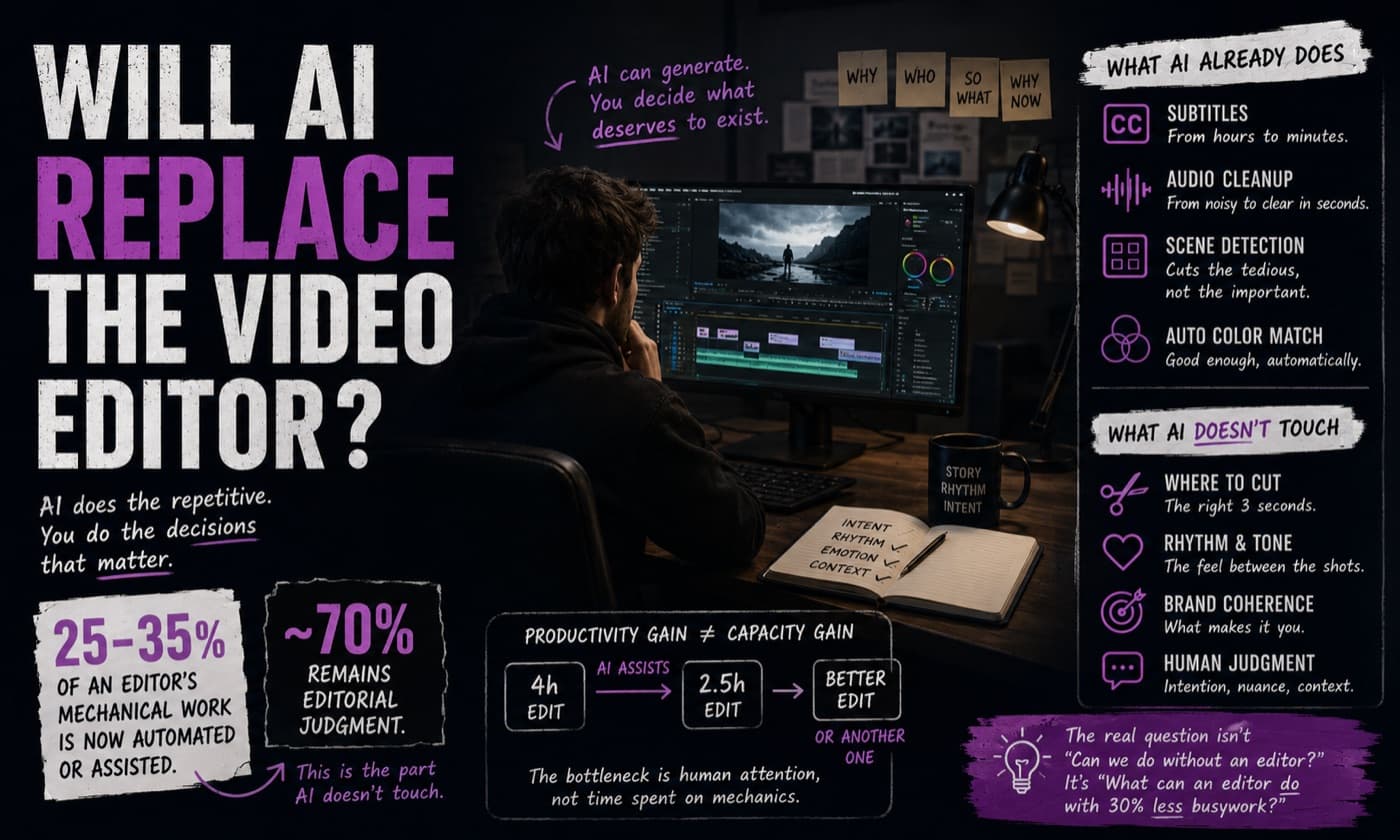
AI has absorbed 25–35% of an editor's mechanical work. It hasn't touched the editorial judgment that makes up 70% of the craft, and the productivity gain doesn't create the capacity people think it does.
 Methods
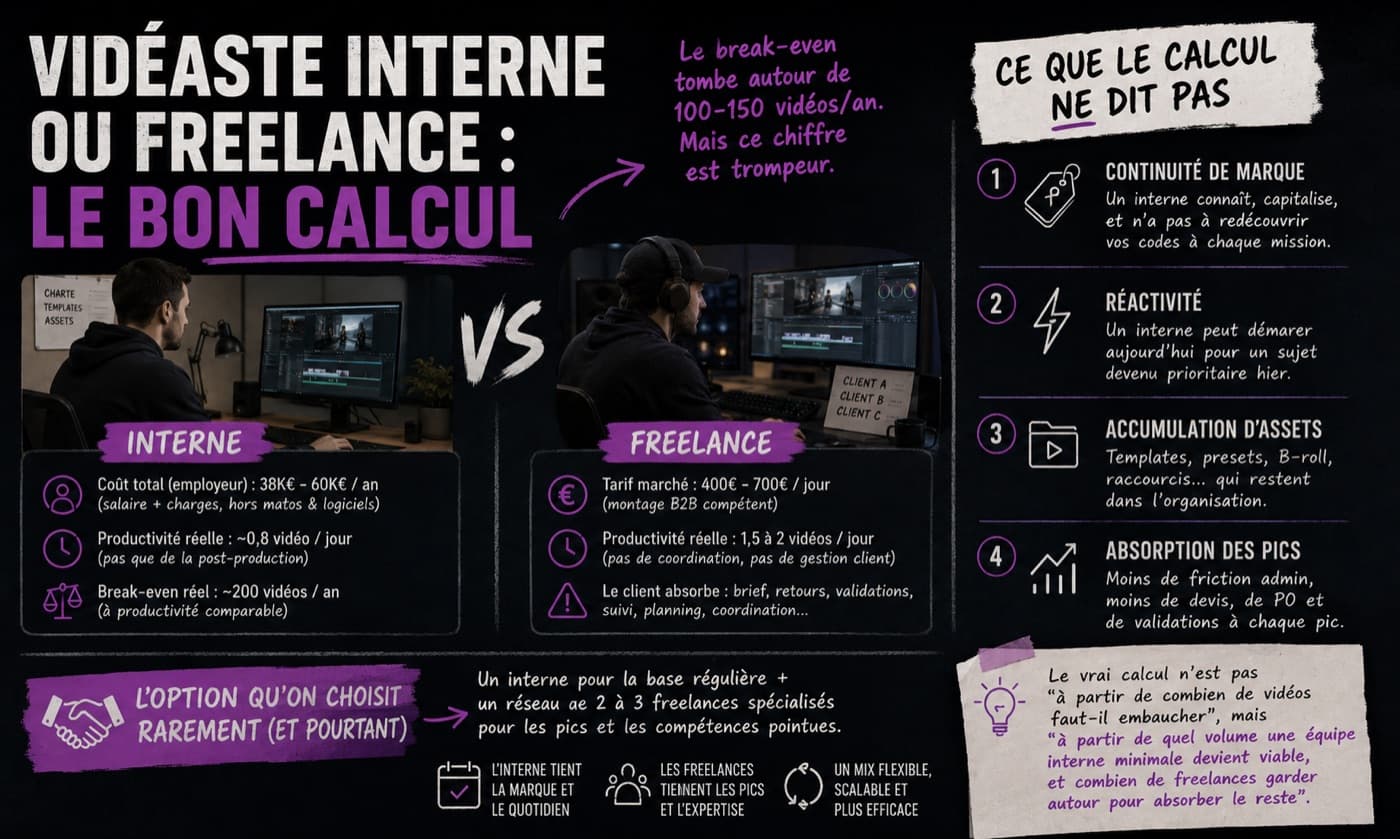
The break-even sits around 100–150 videos per year, but the number is misleading. Four things a pure hourly-cost calculation misses, and the hybrid option people rarely pick.
 Methods
The question is badly framed. The honest range runs from one hour to more than a day depending on finish level, and a handful of factors really move the dial.
 Methods
Handing 'a few extra videos' to a comms coordinator is asking for a quarter to half a job without saying it. The math no one does at hiring time, and why skill isn't the real issue.
 Methods
Capacity, coverage, frequency: a video team serves two of the three. The arithmetic behind why opening one more channel degrades all the others, and how to set the hiring threshold.
 Methods
Batching the shoot isn't an efficiency trick — it's what makes multi-channel production sustainable. Three concrete reasons, one of them much heavier than the others.
 Methods
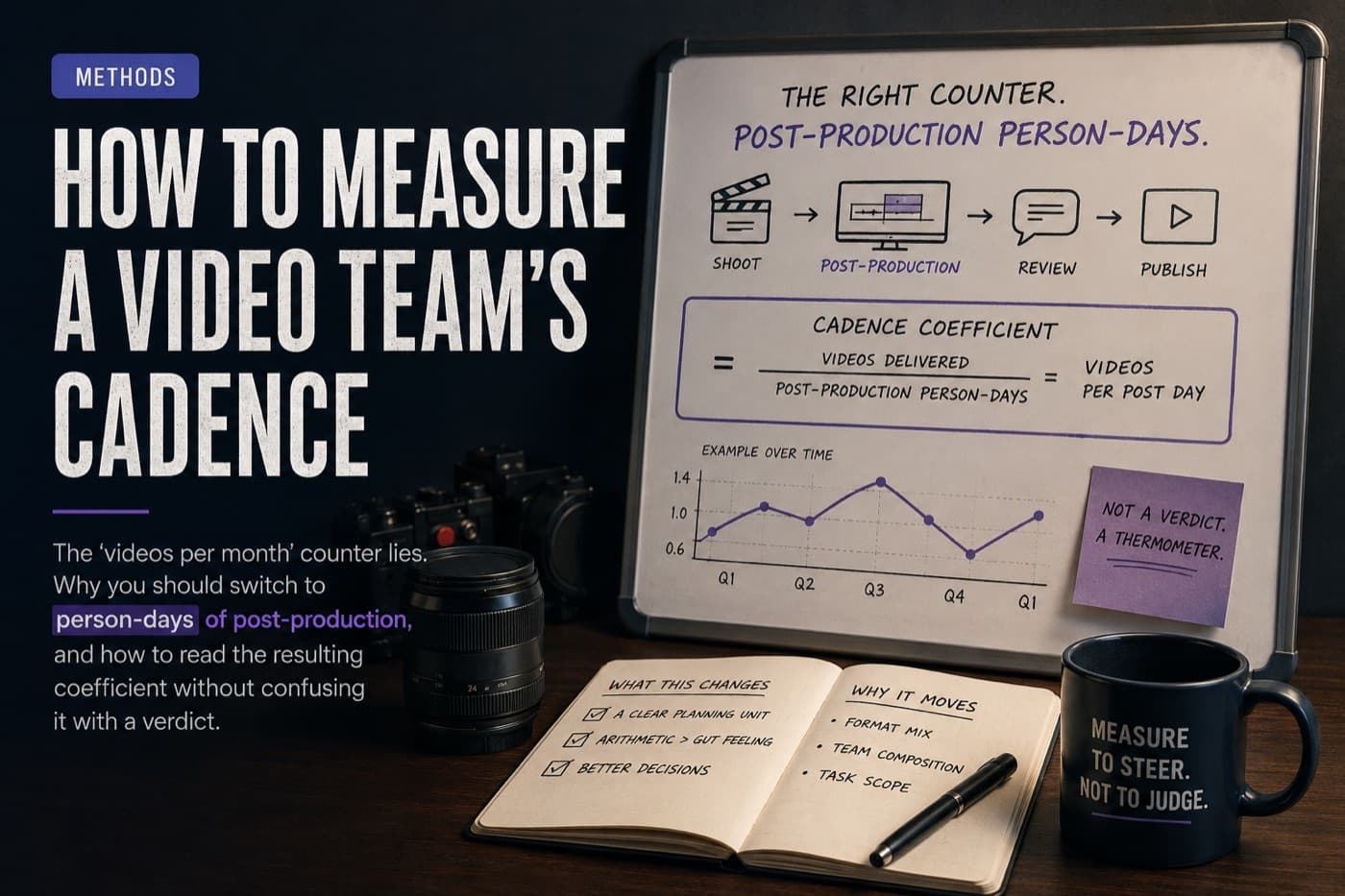
The 'videos per month' counter lies. Why you should switch to person-days of post-production, and how to read the resulting coefficient without confusing it with a verdict.
 Methods
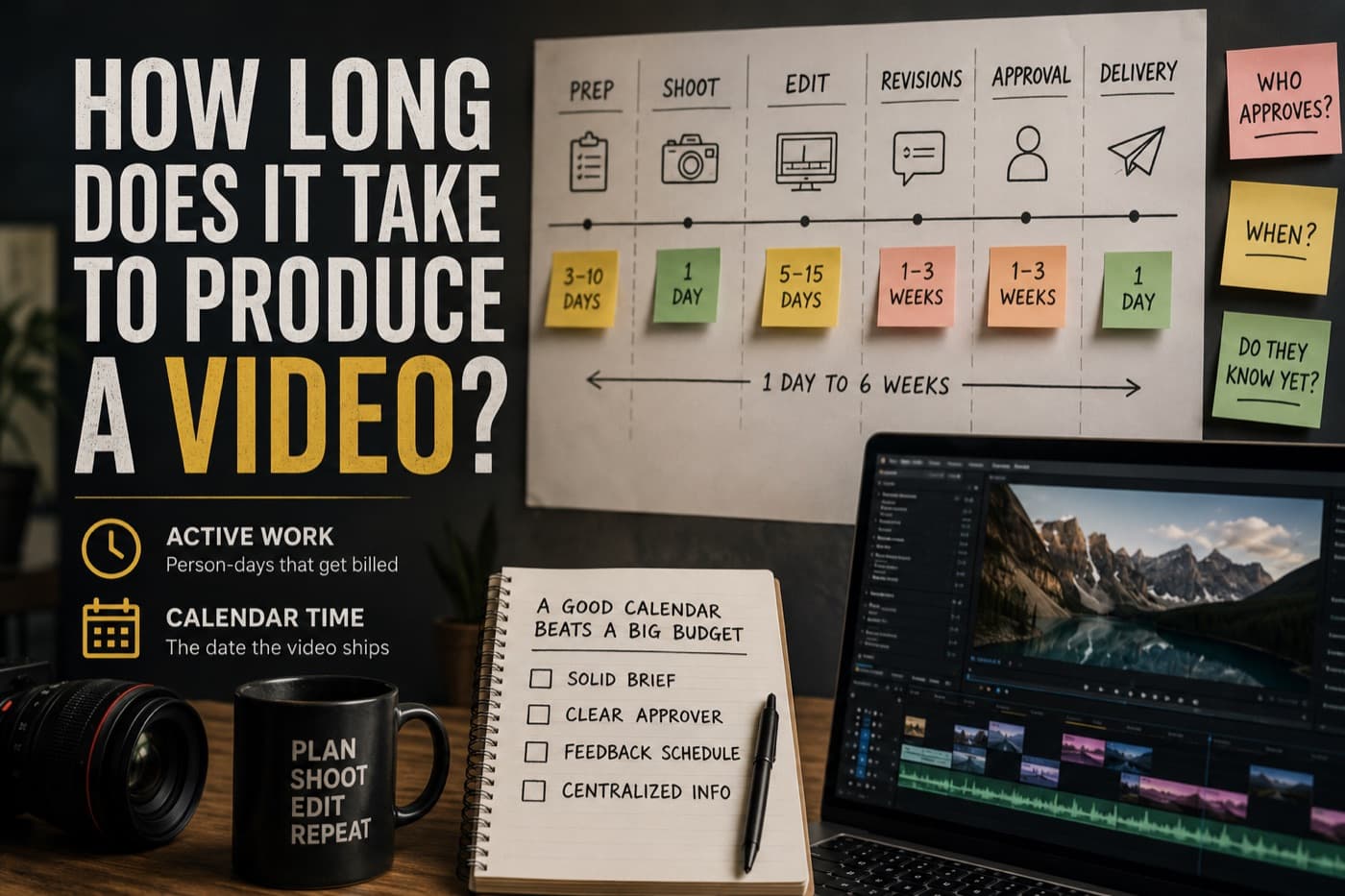
Video production time is not just shooting or editing hours. The useful distinction is active work versus calendar time.
 Methods
75% of online video views come from mobile. Platforms built their algorithms around 9:16. The question is no longer whether to make vertical video — it's how to keep up.
 Methods
In most production teams, the brief exists. It's in a Google Doc, an email, a Slack thread. The information is there. And yet, the moment a video enters the production tool, someone has to re-enter it.
 Methods
TikTok recommends 1 to 4 videos per day. The average brand posts two per week. That gap isn't a conviction problem — it's a pipeline problem.